Pwéra úsog
2025, photo-video film, 19 minIn 1945, in Paris, the Women’s International Democratic Federation (WIDF) was founded. According to historian Francisca de Haan, it was “the largest and probably the most influential international women’s organization of the post–World War II era.” Today, assessments of the organization’s legacy remain contested. Some scholars, citing reports from the FBI and the House Un-American Activities Committee, describe WIDF as a communist attempt to manipulate women. Others view it as a movement advocating for women’s rights, and researchers like Elizabeth Armstrong note WIDF’s role in anti-colonial and anti-racist struggles led by women in Asia, Africa, and Latin America.
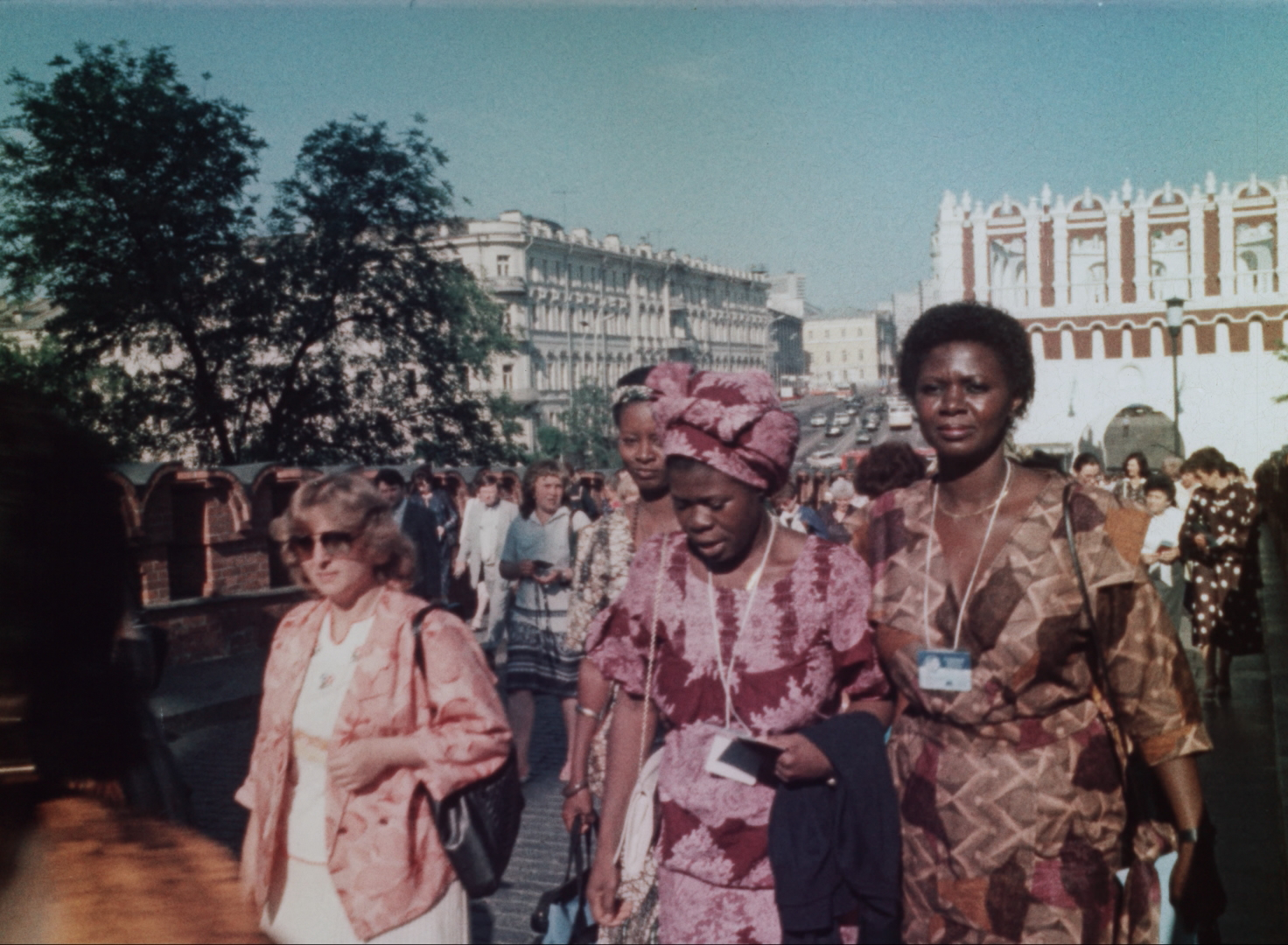
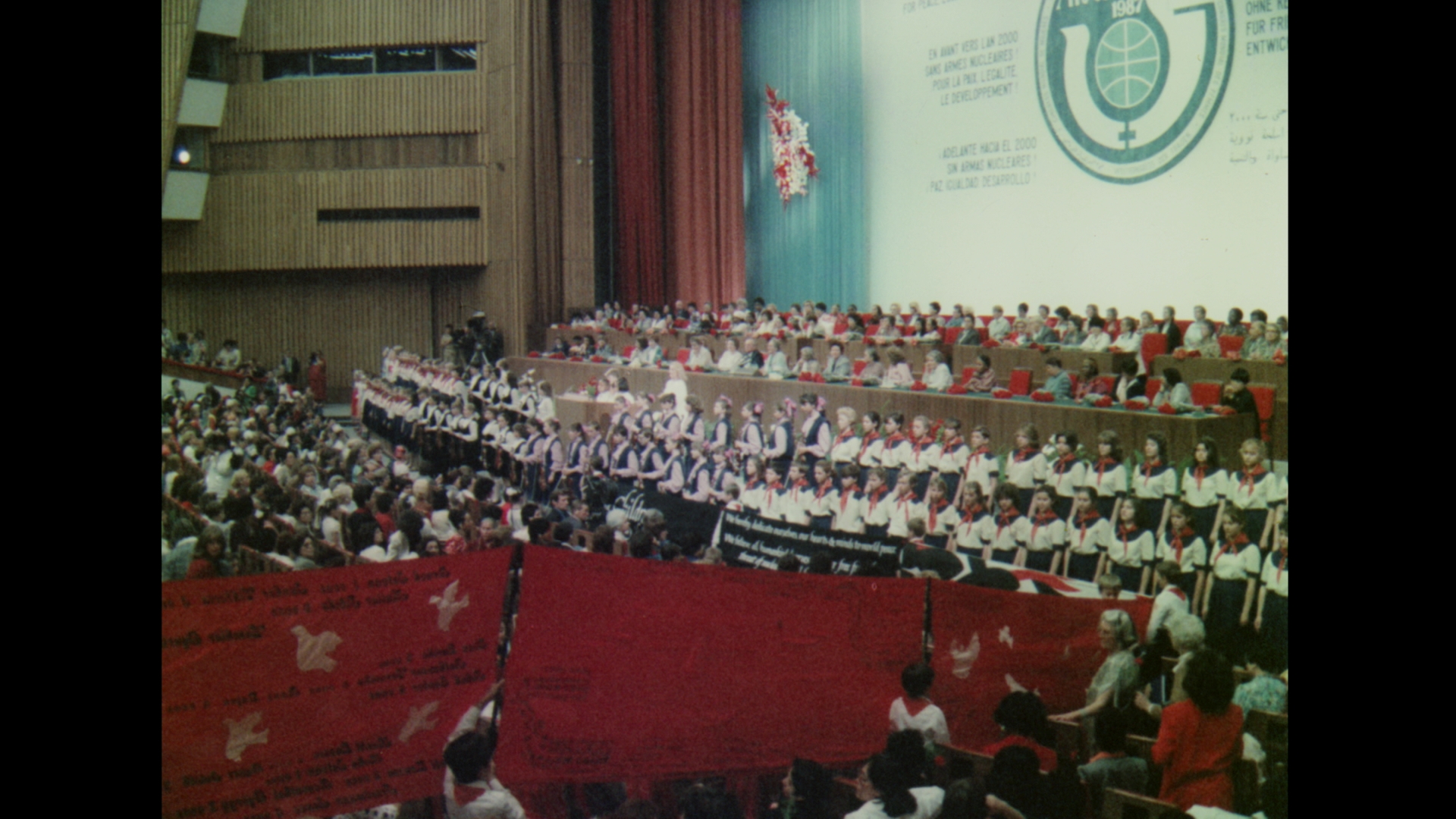
In 1987, during the Perestroika era, WIDF organized the World Congress of Women in Moscow, that brought together 2,800 women from 150 countries. Among them, there was the protagonist’s grandmother, an interpreter who collected words from global conversations that had no equivalents in other languages. Revisiting her notes, archival footage, and sites of official delegations, the protagonist is guided by these fragments to a question: what words can capture the present, when language itself slips away, dissolves, and borrowed slogans drown out one’s voice?
authors: Yana Osman, Anton Khamchishkin, Zinaida Tuzova
festivals / exhibitions / pitches / labs / awards:
Moving Image Art Prize-2025, nominated project by Mudam Luxembourg, CWB Paris, and Tate Modern (Paris, France)
Rencontres Internationales Paris/Berlin 2025 (with Jeu de Paume, Musée de la Chasse et de la Nature, Institut du monde arabe, the MEP Paris), Group Show (Paris, France)